
Pleasantville Previous Residents by Era
Previous residents of a Pleasantville address are reconstructed from overlapping records. The present parcel record supplies the current owner, situs, and block, lot, and qualifier. A recorded deed supplies the parties and legal description. Historic directories and census schedules can then distinguish listed occupants from the people who held title. The sources do not all reach equally far back or appear in the same interface, so the year of the question should determine the first stop.
| Source | Years It Covers | Where Held | What It Shows |
|---|---|---|---|
| County Clerk BrowserView | Public images from March 1, 2000; index-wide start not located | Atlantic County Clerk online search | Recorded-document parties, date, instrument or book/page, consideration, and legal description |
| Atlantic County deeds and indexes | 1837-1900 indexes; deeds through 1908 in the FamilySearch catalog | New Jersey State Archives and FamilySearch | Older deed books, indexes, mortgages, and chain links |
| Historic directories | Boyd 1918-1922; Polk 1923-1931; Polk runs noted from 1910 | ACFPL and Atlantic County Library Resource Center | Printed names, address wording, household notation, and abbreviated occupation fields |
| Federal census microfilm | Atlantic County reels 1830-1930; released federal schedules only | Atlantic County Library and federal repositories | Household relationships, ages, and an historical snapshot |
| Sanborn maps and permit records | Maps: 1896, 1906, 1911, 1917, 1924, 1931; permit search range not located | Princeton digital maps; Pleasantville office request | Building context, use, and address-keyed permit material |
For a recent transfer, begin with the parcel and BrowserView. For a pre-2000 chain, preserve the book and page and move to the Archives or FamilySearch. For who lived at an address between transfer dates, consult the Pleasantville city directory collections and census material. A deed party, a listed occupant, and a mailing address are different kinds of evidence.
Pleasantville Parcel Start for Past Residents
The Atlantic County Property Assessment Search Hub is the current starting point for a Pleasantville address. Set the Town Filter to Pleasantville, then search by owner name, property or address, or B.L.Q. Record the owner name exactly as returned, the situs address, block, lot, qualifier, class, sale date and price, year built, dimensions, square footage, and relevant display flags. The portal is a current tax-data snapshot, so note the search date as well.
Situs means where the parcel lies. A mailing address can help locate a party, but it may belong to another property, a post-office box, an estate representative, or a stale record. Neither field alone proves who occupied the property. When an address is close to a municipal border, confirm the Pleasantville situs in the tax record and county GIS before adding it to a house history.
Block, lot, and qualifier, often shortened to B.L.Q., are the durable bridge between an address, a map, and a deed. They are safer than a street-text match when units, rear parcels, or old address wording share a number.
Pleasantville Deed Chain Backward
Atlantic County Clerk BrowserView searches recorded documents by party name, instrument, book and page, parcel, town, date, lot and block, and related property keys. Search a person in the Clerk’s party format, Last First, then test spelling, company-name, and second-party variants when needed. The earlier help also describes document-type and date-range filters, linked documents, and book/page searching. The date on a deed, recording date, and assessment sale date should be copied as separate fields.
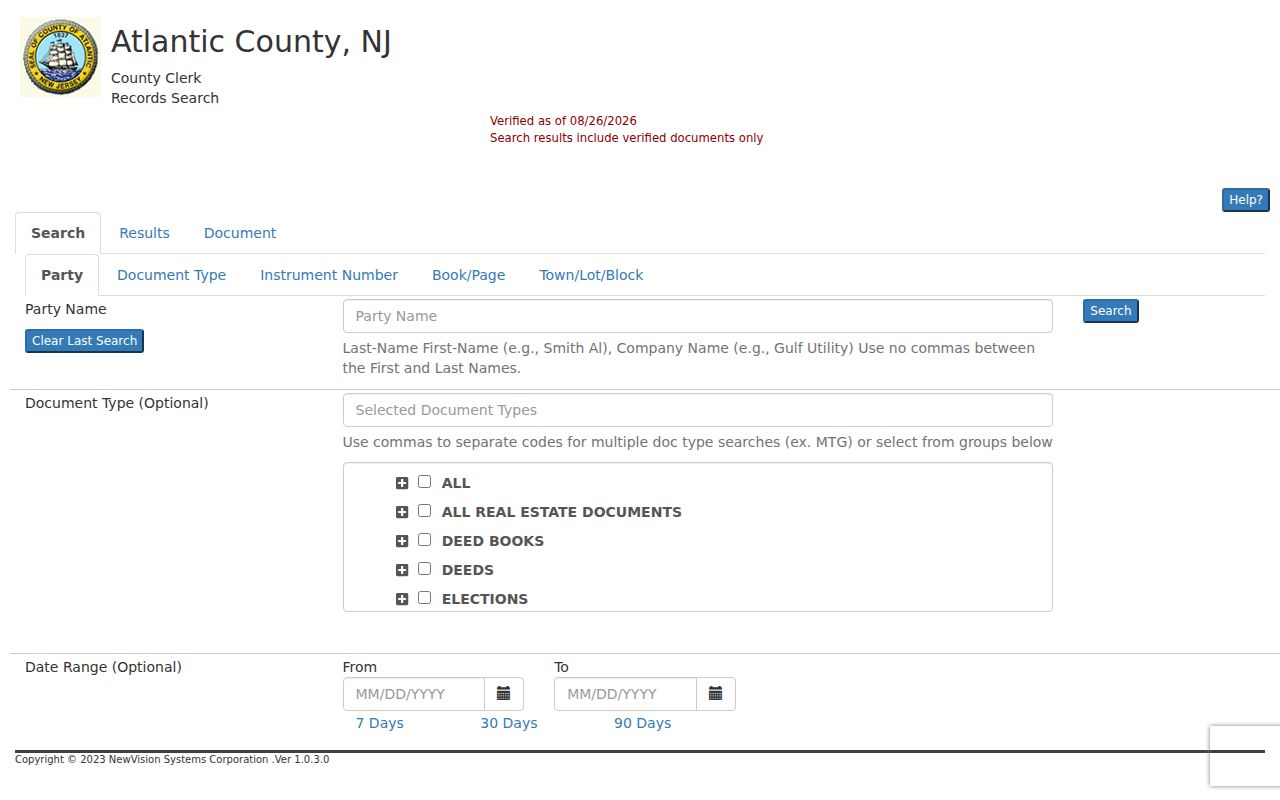
The search result is the beginning of the chain, not the conclusion. Open the purchase deed and compare the legal description with the block, lot, and qualifier before treating it as the same parcel. A recorded mortgage release or corrective deed may explain a document relationship but is not, by itself, a transfer of ownership.
- Find the current parcel in the assessment hub and retain the situs and B.L.Q.
- Search the current owner as grantee in BrowserView, with Pleasantville and a useful date range.
- Open the purchase deed. Record grantor, grantee, deed and recording dates, consideration, instrument or book/page, and legal description.
- Search that grantor as an earlier grantee to locate the prior purchase.
- Repeat the link backward, using spelling variants and married or widow names only when the document supports the match.
- Grantor / grantee
- The grantor transfers an interest named in a deed. The grantee receives that interest.
- Chain of title
- The documented series of property transfers connected through deeds and their legal parcel description.
- Legal description
- The parcel wording in a deed, often using block, lot, subdivision, or metes and bounds. It can outlast a street-name change.
- Criss-cross directory
- An address-ordered directory section that can identify listed occupants by street and number when a volume includes it.
Pleasantville BrowserView Image Boundary
Public Clerk images begin March 1, 2000. That is an image-access boundary, not a claim that earlier entries do not exist. The exact beginning year of the County Clerk’s online index was not located in official sources. Once a chain reaches an earlier book, retain its book and page. Older county instructions use that locator for a copy request, while later records prefer an instrument number. Confirm the current copy route with the Clerk because older instructions and current portal wording do not fully match.
FamilySearch’s Atlantic County catalog identifies deeds from 1837 to 1908 and a deed index from 1837 to 1900.
The New Jersey State Archives Atlantic County Clerk guide identifies deeds and indexes for 1837 through 1900. Use the catalog or guide to find the correct book or index, then verify repository-level availability for the surname and year. County formation in 1837 does not mean every item is complete, indexed, or digitized.
Pleasantville Previous Residents in Directories
A deed chain names people who transferred an interest in a parcel. It does not list every person who lived there. To look for past residents at the household level, start with a known address and year in a reverse or criss-cross directory when available. If the volume only offers surname entries, compare each same-name result by street, spouse or relative notation, and the address found in nearby years. The directory collection details, including Boyd and Polk coverage, remain in the Pleasantville city directory records.
Then pair the printed address with the nearest released census schedule. A census can add relationships and ages; the directory can show an intervening address and the terse fields printed by its publisher. Federal census access follows the 72-year release rule, and ACLS’s 1830-1930 reel description is a local holding note rather than an assurance that every census search is online.
- Write the street name and number exactly as the directory prints them.
- Mark each person at the address, then compare the next available edition for a move, a new household, or a gap.
- Use a census relationship, age, or nearby landmark as an independent anchor before merging similar names.
- Keep an occupant listing separate from an owner, a deed party, and a mailing address.
Note: A historical directory is an editorial snapshot and can omit boarders, new arrivals, unlisted addresses, or people who declined listing.
Pleasantville Maps and Past Residents
Princeton’s Pleasantville Sanborn collection supplies six dated views: 1896, 1906, 1911, 1917, 1924, and 1931.
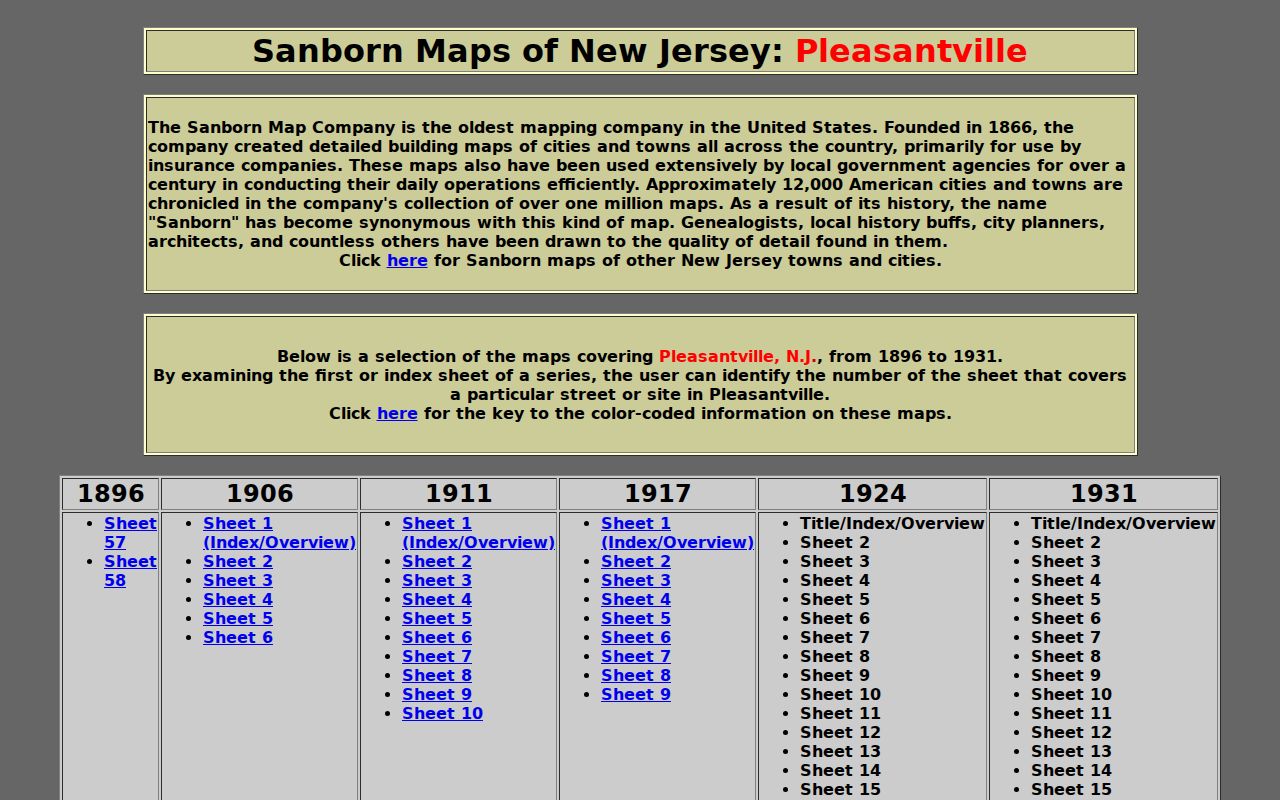
Use a Sanborn sheet to test whether a building footprint, street segment, or stated use was present around a directory or census year. It can also help resolve a landmark or older street spelling. These are fire-insurance maps, not ownership records. Pair a map with an address entry and deed before assigning a building to a person or a household.
Permit and zoning material can add a dated alteration, inspection, certificate-of-occupancy, or site-plan record. A public Pleasantville online permit search was not located. Request the permit jacket by exact address, approximate year, and record type, and do not treat an applicant or contractor field as an occupant finding.
Pleasantville Street Name Bridge
Pleasantville ordinance 20-2005, adopted August 15, 2005, changed Manery Avenue to Mallard Place. That is a documented name bridge for past residents research. Search both street names in deed legal descriptions, directories, newspapers, and maps, then confirm that the block and lot are the same parcel. Do not expand that one ordinance into a citywide renumbering story: no official citywide address-renumbering project was located.
Street labels can change while the legal description persists. For a difficult address, retain both historical and current street text, map the parcel, and let the B.L.Q. connect the records. This approach is especially useful when a directory gives only a corner, a directional abbreviation, or a street spelling that no longer appears on a modern map.
Pleasantville Past Resident Endpoints
A household trail may end with an obituary, estate, or later transfer, but each source has a limited role. ACLS advertises Heritage Hub obituary access for eligible library-card users and holds local obituary files and newspaper indexes with the Resource Center and Historical Society. A death notice can supply an approximate date or relative. It can also list a funeral or family address, so compare it with the directory year and parcel record before tying it to the property.
Atlantic County’s Surrogate and related probate material can identify an executor, heir, will date, estate address, or property disposition. Public availability, copy fees, and sealed materials require confirmation with that office; no countywide live estate-name portal was located. Digitized Atlantic County wills cover 1837-1921 through ACLS. The most useful endpoint is one supported by both a named estate or obituary record and a later deed event.
Lawful use. Use Pleasantville previous-residents records for house history, family research, estate questions, and personal curiosity. Do not use a historical address trail to stalk, harass, or harm any person.
Pleasantville Previous Residents Evidence Ledger
A short ledger keeps a plausible story from becoming an unsupported identity. For each record, retain the name exactly as printed, source, date, address field, relationship or role, independent anchor, and access limit. A party in a deed, a directory occupant, and a voter or mailing field should never merge merely because the names look alike.
| Printed name | Copy spelling, initials, and any widow or spouse notation without correction. |
|---|---|
| Address field | Label it as situs, mailing address, directory residence, legal description, or map location. |
| Independent anchor | Use a date, relative, B.L.Q., census relationship, or deed description that supports the match. |
| Open issue | State the missing year, image boundary, street-name conflict, or restricted record instead of guessing. |
Atlantic County’s land research often leaves Pleasantville for the county offices and repositories in Mays Landing or Somers Point. That is a custody trail, not evidence that an address belongs outside the city. Keep the agency, repository, and access date alongside the record.